I am Rangawari Turitsinze and I am five years old. I live in Rwanda, of the Tutsi tribe, and my family is proud. Our life is hard, though not so hard as it was since people have come from outside my tribe and brought aid. I do not see those who aid us, but I go to school now, and my teacher reads my parents and me letters sent from a land far away. A woman who is not hungry sends us money for food, and for me to go to school. This makes my mother glad and my father says it gives him hope, though I do not know for what.
Like all girls from my village, my hair is coiled into knots that spring from my head and they make my mother laugh. She catches me as I run past her, and tugs them gently. “Rangawari,” she says, “your hair springs from your head like the happiness that springs from your heart.” She says my smile reminds her of sunshine and of the dawn, in the way that all mothers say these things. My father says little, as is the want of fathers, but I feel his eyes follow me and I feel the fear in his heart. When I have asked why he is afraid, he has said little, though today I know.
My dream has been to leave my tribe one day, and travel to a city far away, where I might learn to be a teacher also. I would return one day, and work in the school and marry Ashara, a boy in my class who is big and strong, whose family smiles when they see us together. Ashara says this will never happen and that he does not like girls. But my mother tells me that it is the role of women to hold our tribe together and to make babies and keep our village alive.
I hear my mother and my teacher speak of the power of women and I do not always regret not being born a man. The boys in my class tease us, and tell us that our value is only to carry the water, and to help care for the goats and the plants that the men grow. But my mother says that with no water and no plants and with hungry goats the men would not last long, and with no babies to follow them they would soon be neither strong nor weak, but instead nothing at all. I tried to explain this to Ashara once, but his father heard me and beat me soundly. My father in the end made me apologise to Ashara and his father, and I saw Ashara smirking when I looked up quickly in the middle of the speech my mother had me learn. “Say these words, Rangawari”, she said. “But do not believe them – not even for an instant. We say what we need to say to survive. We do what we need to do to remain invisible. Pity the day when you are noticed by men.”
And today that day came to my village. I was sitting outside our hut, drawing pictures of myself in the dust with sticks, and making my picture dresses from leaves. And then the air was filled with shouting. From out of the surrounding trees came many men, screaming and waving pangas with blades bigger than my head, and grabbing everyone in their path as they marched into our village. Some had guns, black and ugly, with long blades tied to their ends. I saw a soldier use his blade to run a man through as he waved his hands in front of his face and fell to his knees, begging to be left alive. I don’t think the soldier even looked at him as he pierced him through the neck, then used his panga to chop his head in one hard swing from his body. I tried to run but my feet felt like they were stuck to the ground with the sap we use to make the teething sticks for the village babies. The babies suck and chew and gurgle and slowly break them down till they dissolve right away. That’s how I felt – as though something in my belly had dissolved right away. I stood there, frozen, till I heard my mother screaming; “Rangawari! Rangawari! Run!” I watched her for a moment, then turned and ran as fast as I could to our school, and am hiding now under my teacher’s desk. I looked out only once, and saw my mother held from behind by two men while she screamed, bent double. It was a fear I never thought I’d see in one so strong, and it made me sick, so I hid my face, and in the end her screams went silent. Of my father there was no sign, though I saw Ashara as I ran to my hiding place, laying outside his hut, his neck cut, and his head resting in a spreading pool of blood. They had taken his clothes also, and between his legs there was a gaping wound and another pool of blood. He was dead.
They come for me now, the men with axes. I know I am all that is left, and I know my mother would be proud that I was the last to die. I am indeed clever, and would have made an excellent teacher for my village, though perhaps there are more important things to learn than numbers and letters. I do not know if my passing will be as my mother’s, slow and ugly, or as the men of my village – short and bloody - and I pray to the God of the white men that it will be fast. I hear them now, on the other side of the door. I hear them and I wonder who will remember me.
I am Rangawari Turitsinze. I am five years old and I will not see the dawn.
*********************************************************************
Author's note:
Rangawari was one of my sponsor children when she, her family and her entire village were hacked to death in the Rwandan massacre of 1994. I've put her story here to speak for her. Her voice should be heard.
But atrocities such as these continue today. The Democratic Republic of the Congo is seeing a concerted attack against its women by military terrorists who are seeking to destroy the very fabric of this nation by destroying and demoralizing the feminine heart and soul of the Congolese culture. The Panzi Hospital is dedicated to the surgical repair of these female victims of rape and the restoration of their physical, emotional and spiritual well being. Please, open your heart and consider giving to this worthy cause. Links to information about the Panzi Hospital are listed below.
http://www.panzihospitalbukavu.org/
http://www.pmu.se/english/about/project_dr-kongo.php
http://www.msmagazine.com/spring2005/congo.asp
To donate directly, use the drop down box in this link titled "Purpose" and select 'Panzi Hospital':
http://www.pmu.se/english/donate/donation.php?pn=51450002
Friday, January 2, 2009

Saturday, December 13, 2008
My Christmas List
My Christmas list this year reads as follows;
Handmade ring setting for currently-unset gems - $2000
Elsa Peretti heart shaped gold earrings from Tiffany - $1500
Black leather gloves from Nordstrom - $80
Slippers - $45
Enamel and gold passport charm bracelet charm - $275
Serving tray - $80
Bulgari perfume/soap - $125/$27
Williams-Sonoma Christmas dinner plates - $120
Crate and Barrel red glass wine glasses - $32
Platinum hoop earrings - $460
Troll beads - $25 – virtually limitless
Now it’s true that I don’t expect to get everything on this list (and I won’t). This list is more of a ‘hope/vague suggestion list’ than a list of expectations. And it’s also true that I will be grateful for everything I receive. I’ve never been the sort of person to have a huge sense of entitlement and I don’t regret the things I’ll never own. However….
It occurs to me as I read this list that there’s not one thing on this list that I truly need. And that suggests to me that my list reads as it does because all my needs have been already met. And that’s the sort of statement that should make all of us stop and think.
Nowhere on my list does it say “fresh water”, or “food for my children”, or “medical care”. Nowhere does it read “education”, or “safety from violence”. I’m not asking Santa for a job, for the right to vote, for a roof over my head, for a cessation to fighting in my neighborhood or for healing for any harm done to me or to those I love. It’s the Christmas season here in beautiful New York and I am in the process of stuffing my stocking with as many luxury items and non-essentials as I can accumulate. As Bono once said when introducing one of his fundraising efforts:
“I am a fat cat in the snow.”
But as life would have it, I believe in God. And I believe in a God who is sovereign over me and who hasn’t taken his eye away from this world, or from those whose stockings will be significantly less empty than mine this Christmas. And I believe that the God I honor set a significant example – a template if you will - when sending his son to be born in a manger rather than a palace, and that it’s a template which God expects us still to fill. There is something appalling and rather less than lovely about my Christmas list when set against the lives of some other of God’s children in this world we share.
I am aware that, were someone homeless, wounded, destitute or suffering to appear at my door I would not turn my back. And yet – people who suffer in all these ways are easily accessible to help. Am I simply benefiting from the ability to avert my gaze? Am I benefiting from distance? From insularity? Is the entire nature of my Christmas formulated around the unspoken assumption that I just won’t look beyond my own pine scented, fairy lighted living room? In other words, will it all be ok just so long as I stick my fingers in my ears and hum?
And yet, I feel an insistent tap on my shoulder, and the urgent yanking of my fingers from my ears, and the Jesus of Bethlehem saying to me “Turn around, girl, and look.”
And there they are – all in my living room. People with less than me. And not just a little less – a LOT less. People in pain, people with no joy, no hope, people dependant on me for help. People who need me to see them and not turn my back. Brothers and sisters around the world who need me to acknowledge their existence.
So this year I’m going to rework the list, and I’m going to see if I can give a little hope, a little love, some health, some peace, some future to people who deserve it a lot more than I deserve a pair of platinum earrings. And when I do that, I just know I’m going to feel God’s approval that I’m finally getting into the spirit of Christmas.
This Christmas, I’d like to share with you an organization you might find worthy of your financial ‘Christmas cheer’. The Panzi Hospital in the Democratic Republic of the Congo (DRC) is dedicated to the surgical repair of the victims of rape – a weapon being used throughout the DRC as an effective means to demoralize and destabilize a culture and society already torn apart by violence and poverty. Please have a look at the links below, and then you, like I, might like to rethink ‘The Christmas List’.
Merry Christmas – with love to you all,
K.E. Stapylton
http://www.panzihospitalbukavu.org/
http://www.msmagazine.com/spring2005/congo.asp
Handmade ring setting for currently-unset gems - $2000
Elsa Peretti heart shaped gold earrings from Tiffany - $1500
Black leather gloves from Nordstrom - $80
Slippers - $45
Enamel and gold passport charm bracelet charm - $275
Serving tray - $80
Bulgari perfume/soap - $125/$27
Williams-Sonoma Christmas dinner plates - $120
Crate and Barrel red glass wine glasses - $32
Platinum hoop earrings - $460
Troll beads - $25 – virtually limitless
Now it’s true that I don’t expect to get everything on this list (and I won’t). This list is more of a ‘hope/vague suggestion list’ than a list of expectations. And it’s also true that I will be grateful for everything I receive. I’ve never been the sort of person to have a huge sense of entitlement and I don’t regret the things I’ll never own. However….
It occurs to me as I read this list that there’s not one thing on this list that I truly need. And that suggests to me that my list reads as it does because all my needs have been already met. And that’s the sort of statement that should make all of us stop and think.
Nowhere on my list does it say “fresh water”, or “food for my children”, or “medical care”. Nowhere does it read “education”, or “safety from violence”. I’m not asking Santa for a job, for the right to vote, for a roof over my head, for a cessation to fighting in my neighborhood or for healing for any harm done to me or to those I love. It’s the Christmas season here in beautiful New York and I am in the process of stuffing my stocking with as many luxury items and non-essentials as I can accumulate. As Bono once said when introducing one of his fundraising efforts:
“I am a fat cat in the snow.”
But as life would have it, I believe in God. And I believe in a God who is sovereign over me and who hasn’t taken his eye away from this world, or from those whose stockings will be significantly less empty than mine this Christmas. And I believe that the God I honor set a significant example – a template if you will - when sending his son to be born in a manger rather than a palace, and that it’s a template which God expects us still to fill. There is something appalling and rather less than lovely about my Christmas list when set against the lives of some other of God’s children in this world we share.
I am aware that, were someone homeless, wounded, destitute or suffering to appear at my door I would not turn my back. And yet – people who suffer in all these ways are easily accessible to help. Am I simply benefiting from the ability to avert my gaze? Am I benefiting from distance? From insularity? Is the entire nature of my Christmas formulated around the unspoken assumption that I just won’t look beyond my own pine scented, fairy lighted living room? In other words, will it all be ok just so long as I stick my fingers in my ears and hum?
And yet, I feel an insistent tap on my shoulder, and the urgent yanking of my fingers from my ears, and the Jesus of Bethlehem saying to me “Turn around, girl, and look.”
And there they are – all in my living room. People with less than me. And not just a little less – a LOT less. People in pain, people with no joy, no hope, people dependant on me for help. People who need me to see them and not turn my back. Brothers and sisters around the world who need me to acknowledge their existence.
So this year I’m going to rework the list, and I’m going to see if I can give a little hope, a little love, some health, some peace, some future to people who deserve it a lot more than I deserve a pair of platinum earrings. And when I do that, I just know I’m going to feel God’s approval that I’m finally getting into the spirit of Christmas.
This Christmas, I’d like to share with you an organization you might find worthy of your financial ‘Christmas cheer’. The Panzi Hospital in the Democratic Republic of the Congo (DRC) is dedicated to the surgical repair of the victims of rape – a weapon being used throughout the DRC as an effective means to demoralize and destabilize a culture and society already torn apart by violence and poverty. Please have a look at the links below, and then you, like I, might like to rethink ‘The Christmas List’.
Merry Christmas – with love to you all,
K.E. Stapylton
http://www.panzihospitalbukavu.org/
http://www.msmagazine.com/spring2005/congo.asp
Sunday, December 7, 2008
Something Beautiful
For those of you with access to iTunes who appreciate atmospheric, beautiful music, I'd like to suggest '1 Giant Leap - featuring Michael Stipe and Asha Bhosle' singing 'The Way You Dream'. It's for sale on iTunes and is in the genre best described as 'world music'. Here's part of the write up from IMDB on the project;
"1 Giant Leap is a unique project for the 21st century which fuses words, sounds, rhythms and images from across the globe to celebrate the creative diversity of musicians, storytellers, authors, filmmakers, artists and thinkers from cultures around the world. The results illustrate breathtaking artistic and cultural diversity with a clear message of unity running throughout."
While the entire cd is beautiful in general and awe-inspiring in parts, I'd recommend The Way You Dream as a true highlight; it's the sort of music you listen to when you wish to contemplate the imponderable mysteries of life - or perhaps just close your eyes to concentrate on a single, undiluted moment in time. Either way, it should be on every mature music lover's play list.
Enjoy!
Yours Entertainingly,
K.E. Stapylton
"1 Giant Leap is a unique project for the 21st century which fuses words, sounds, rhythms and images from across the globe to celebrate the creative diversity of musicians, storytellers, authors, filmmakers, artists and thinkers from cultures around the world. The results illustrate breathtaking artistic and cultural diversity with a clear message of unity running throughout."
While the entire cd is beautiful in general and awe-inspiring in parts, I'd recommend The Way You Dream as a true highlight; it's the sort of music you listen to when you wish to contemplate the imponderable mysteries of life - or perhaps just close your eyes to concentrate on a single, undiluted moment in time. Either way, it should be on every mature music lover's play list.
Enjoy!
Yours Entertainingly,
K.E. Stapylton
Sunday, November 30, 2008
Happy Thanksgiving, America
This is the Thanksgiving entry from my Facebook page. I thought I'd share it with you here....
In February 2003 I was invited to a home for lunch. Not knowing the hostess well, nor having been to her home previously for any appreciable time, I didn’t know what to expect. Would it be casual or formal? Would the company be enjoyable, welcoming? Would the topics of conversation involve and engage me, or would I have nothing to contribute and little to learn? Most of all I wondered what sort of food would be served. Would it be boring, stodgy food which was a chore to eat? Or bland food that was all nutrition but no fun? Or what if the food was overly rich – delicious at the time, but leaving me sick and bloated by the end of the meal? I went with a polite smile on my face, but trepidation in my heart.
And yet, when America opened her door to me, all the warm, wonderful, complex smells of an exquisite meal tickled my senses. After being ushered kindly to my seat I was served a tantalizing appetizer of career possibilities and professional opportunity which whet my appetite and made me hungry for more. This was quickly followed by a rich and hearty main course of freedom, justice, egalitarianism and tolerance which nurtured me and sat warmly in my belly. Finally came dessert; a light, complex dish made from the sweetness of new friendships, the tang of individuality, and the smooth creamy lushness of support and acceptance.
At the end of the meal I collected my coat to leave. “Stay!” said America, and reached out her hand. I hesitated for just a second…then hung my coat back in the cupboard and replaced my hat on the hook by the door. To this day I sit in the big comfortable chair by the fire in America’s home, my feet curled up under me, content and grateful for the welcome I’ve received from this most gracious hostess.
Happy Thanksgiving, America.
Yours Gratefully,
K.E. Stapylton
In February 2003 I was invited to a home for lunch. Not knowing the hostess well, nor having been to her home previously for any appreciable time, I didn’t know what to expect. Would it be casual or formal? Would the company be enjoyable, welcoming? Would the topics of conversation involve and engage me, or would I have nothing to contribute and little to learn? Most of all I wondered what sort of food would be served. Would it be boring, stodgy food which was a chore to eat? Or bland food that was all nutrition but no fun? Or what if the food was overly rich – delicious at the time, but leaving me sick and bloated by the end of the meal? I went with a polite smile on my face, but trepidation in my heart.
And yet, when America opened her door to me, all the warm, wonderful, complex smells of an exquisite meal tickled my senses. After being ushered kindly to my seat I was served a tantalizing appetizer of career possibilities and professional opportunity which whet my appetite and made me hungry for more. This was quickly followed by a rich and hearty main course of freedom, justice, egalitarianism and tolerance which nurtured me and sat warmly in my belly. Finally came dessert; a light, complex dish made from the sweetness of new friendships, the tang of individuality, and the smooth creamy lushness of support and acceptance.
At the end of the meal I collected my coat to leave. “Stay!” said America, and reached out her hand. I hesitated for just a second…then hung my coat back in the cupboard and replaced my hat on the hook by the door. To this day I sit in the big comfortable chair by the fire in America’s home, my feet curled up under me, content and grateful for the welcome I’ve received from this most gracious hostess.
Happy Thanksgiving, America.
Yours Gratefully,
K.E. Stapylton
Sunday, November 23, 2008
The Carrot and the Stick
The Terror of Prism Fading focuses on the adventures of four children, Rabbit, Rupert, Jasper and Aden, each of whom have a remarkably different family experience. Rabbit has lived in a series of foster homes, her parents and young brother having been killed in a car accident when she was five years old. Rupert is an only child, and although it’s not explicitly stated in the books, has learnt to be the peacemaker in a family where both parents are alcoholics. Jasper has two wonderful parents, but his mother, a significant and powerful figure in the land of Prism, does not live in the family home and is rarely seen by her son. To all intents and purposes, Jasper is an only child in a single parent family. Aden also has wonderful parents but, as king and queen of Prism, they are rarely in a position where they can place family ahead of their public duties and enormous responsibilities. Despite a loving bond with her parents, Aden has been raised largely by a succession of nannies and tutors, isolated from her peers and with crushing expectations for the future resting on her shoulders. At their respective ages of 13 and 14, Rabbit, Rupert, Jasper and Aden already bring significant baggage to their experiences together in Prism.
In creating these characters, I tried to recreate problems and struggles I’ve encountered during my life, particularly my years as a therapist. In a society where children are often indulged beyond what’s good for them, it seems there is still a striking lack of adequate nurture and appropriate support given to the children in our communities in general, and in our homes in particular.
I watched an episode of Dr Phil recently where he discussed the topic of ‘sexting’ – the sending of text messages with a sexual content - and the exponential rate at which this seems to be generated by children. It was jaw dropping to have to see him say to the parent “Well, have you taken the phone away?” (no) “Well why not?” (multiple lame excuses along the lines that ‘my child needs a phone.’) This from the mother of a 12 year old girl who had been sending naked photos of herself out into the ether using said cell phone! He spoke also to a teenage boy and his mother. The boy had been practicing auto-asphyxiation at the local amusement park, riding on the roller coaster unconscious and oxygen deprived. When asked how the boy got to the amusement park, his mother replied “I drive him.”
My firm belief has always been that the majority of parents try hard to do a good and self sacrificing job with their children. But it’s becoming increasingly culturally unpopular to say no, to monitor, to set boundaries, to say “You’re not old enough”, to punish, to deprive and to weed out the behavior in children that we deem to be culturally, morally and socially unacceptable. We have fallen victim to a twist on the ‘me generation’; the ‘you generation’, where we bring up children implying by our own actions that everything they do is precious and deserves our respect and consideration. In trying to empower children, it appears that we often go so far as to give them inappropriate levels of power, giving them possibilities, options and choices that their moral, ethical, social and emotional development simply has not readied them for.
I would encourage – not all – but some parents to be a little less ‘respectful’ and rather more invasive. I spoke to a 17 yr old girl this week who told me – with a straight face – that she prefers to keep her family and her Myspace page separate “because she didn’t think adults would be interested in what teenagers talk about.” A request to join her friends list will be met by being blocked from her page. I talked to a 15 year old boy on Facebook this morning whose 50+ underage friends all had a photo of themselves up for all to see. Where are these children’s parents? In a world where people feel so anonymous that they seem to believe every aspect of their lives needs to be recorded before it’s significant, the role of the family is being eroded.
The point is to make your children feel significant – to you, to make them feel as though they are essential – to you. We make a sad mistake when we imply to children that they are the center of the universe - yet largely invisible in their own families.
There are few pictures more ugly than a world full of grown up children, each and every one believing that world revolves around them, few things more dangerous than children with electronic gadgets and no parental monitoring, and few things sadder than children who go through life with insufficient boundaries and a belief that nobody loved them enough to stand up and be a parent. When parents love children they set boundaries; they make them high and they make them intractable. And it keeps their children safe.
I hope all parents will make the decision to be willing to be the bad guy, to notice all that their children do – the bad and the good – and to keep working hard to find that elusive balance between ‘the carrot and the stick’,
Yours Protectively,
K.E. Stapylton
In creating these characters, I tried to recreate problems and struggles I’ve encountered during my life, particularly my years as a therapist. In a society where children are often indulged beyond what’s good for them, it seems there is still a striking lack of adequate nurture and appropriate support given to the children in our communities in general, and in our homes in particular.
I watched an episode of Dr Phil recently where he discussed the topic of ‘sexting’ – the sending of text messages with a sexual content - and the exponential rate at which this seems to be generated by children. It was jaw dropping to have to see him say to the parent “Well, have you taken the phone away?” (no) “Well why not?” (multiple lame excuses along the lines that ‘my child needs a phone.’) This from the mother of a 12 year old girl who had been sending naked photos of herself out into the ether using said cell phone! He spoke also to a teenage boy and his mother. The boy had been practicing auto-asphyxiation at the local amusement park, riding on the roller coaster unconscious and oxygen deprived. When asked how the boy got to the amusement park, his mother replied “I drive him.”
My firm belief has always been that the majority of parents try hard to do a good and self sacrificing job with their children. But it’s becoming increasingly culturally unpopular to say no, to monitor, to set boundaries, to say “You’re not old enough”, to punish, to deprive and to weed out the behavior in children that we deem to be culturally, morally and socially unacceptable. We have fallen victim to a twist on the ‘me generation’; the ‘you generation’, where we bring up children implying by our own actions that everything they do is precious and deserves our respect and consideration. In trying to empower children, it appears that we often go so far as to give them inappropriate levels of power, giving them possibilities, options and choices that their moral, ethical, social and emotional development simply has not readied them for.
I would encourage – not all – but some parents to be a little less ‘respectful’ and rather more invasive. I spoke to a 17 yr old girl this week who told me – with a straight face – that she prefers to keep her family and her Myspace page separate “because she didn’t think adults would be interested in what teenagers talk about.” A request to join her friends list will be met by being blocked from her page. I talked to a 15 year old boy on Facebook this morning whose 50+ underage friends all had a photo of themselves up for all to see. Where are these children’s parents? In a world where people feel so anonymous that they seem to believe every aspect of their lives needs to be recorded before it’s significant, the role of the family is being eroded.
The point is to make your children feel significant – to you, to make them feel as though they are essential – to you. We make a sad mistake when we imply to children that they are the center of the universe - yet largely invisible in their own families.
There are few pictures more ugly than a world full of grown up children, each and every one believing that world revolves around them, few things more dangerous than children with electronic gadgets and no parental monitoring, and few things sadder than children who go through life with insufficient boundaries and a belief that nobody loved them enough to stand up and be a parent. When parents love children they set boundaries; they make them high and they make them intractable. And it keeps their children safe.
I hope all parents will make the decision to be willing to be the bad guy, to notice all that their children do – the bad and the good – and to keep working hard to find that elusive balance between ‘the carrot and the stick’,
Yours Protectively,
K.E. Stapylton
Friday, November 7, 2008
The Most Wonderful Woman in the World.
Fall has come to New York and we're deep into this most gorgeous time of year. The colors are glorious, the leaves are thick on the ground, and the air is rich with that toasty smell of damp, crusty foliage. Wonderful!
More wonderful still is that I am sharing this beautiful season with my best friend of 32 years, Wendy, who has travelled over from Sydney to spend 5 fabulous weeks with me. (Now seems like a good time to assure you all that we met when we were children...more or less...)
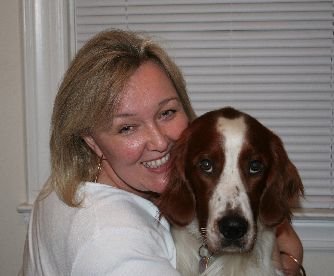
Last night, as we were taking my dog, Dixon, for a walk around town, Wendy said to me "if we met now, do you think we would still be friends?" The answer is a resounding "Yes!" So this post is a tribute to Wendy, the most wonderful woman in the world.
Wendy and I met on a beach in 1976. I was at a camp and she was on vacation with another girlfriend. I noticed Wendy speaking with a young man from our camp who was, at that time, considered very handsome but rather arrogant and egotistical; the biggest impact his success with the opposite sex had made was in his own mind, though his general appeal was widely acknowledged. Both Wendy and the girl she was vacationing with apparently knew this young man via other people, and it was sheer coincidence that she had encountered him on the beach. After a short conversation, however, he wandered away, leaving Wendy more or less stranded in the middle of a large group of people she didn't know with no-one to talk to. She wandered off awkwardly and took up a position by herself on the sand; the girlfriend she had arrived with also apparently having evaporated. For reasons of my own, I knew what it was to feel alone in a crowd and, having been brought up a proactive kind of girl, I went up to Wendy and introduced myself.
Was it an immediate synergy of souls? Nope. Did we have a lot in common? Not really. But we were polite and friendly, we chatted, we laughed over a few things, and we made ourselves 'socially available'. This conversation led to dinner together back at the campsite one evening, then phone numbers exchanged and phone calls made. From here we graduated to get-togethers in each other's homes when summer was over, a sharing of thoughts, a commitment to each other's well being, and a loyal bond that grew into 32 years of the most nurturing friendship I have ever known. When her boyfriend dumped her, I was there; when my mother (and later on my father) died, she was there; when she had her babies, I was there; when my husband and I bought our first home, Wendy was there - with her check book. When Wendy's marriage broke down, I was there - on the end of the phone for an hour or more every day and then with a plane ticket to NY and an open door for as long as she wanted. When living on the other side of the world gets too hard, Wendy is here - spending her vacations, her long service leave, and more time than she realistically has to spare, looking after me and simply helping me to travel successfully through life with fewer bruises than I would otherwise have. As we age, so we realize that we will face bigger and bigger challenges, and so we discuss things like living wills, power of attorney, euthanasia, and who we want to have 'grandma's good tea set' when we finally kick on. More to the point, we have the sorts of conversations only best friends have; "If I am ever incapacitated and in hospital and can't talk, promise me you'll regularly pluck out the hairs that grow out of that mole on my chin..." "Can't I just get it electrolysized?" "Well, ok - just make sure *something* gets done." "You could always get it done now of course..." "Hmmm...maybe I will..."
Wendy and I are very different in nature. I am analytical; she is emotional. I want to discuss politics; she wants to read cook books. I want to grow roses; she wants to grow herbs. I cook complicated French cuisine with complex tastes and subtle, layered flavors; Wendy makes enormous, earthy Italian dishes you need your hands to eat and which make you glad to be alive. Wendy loves to shop for clothes, while I have a passion for collecting unset diamonds. Wendy loves the pre-Raphaelite school of art; I am all about the abstract artists - Kandinsky, Rothko, Pollock. And Wendy adores emotional, intense classical music; I would rather eat glass. In many ways we're about as different as two people can be.
And yet despite all our differences, we both believe in God, we both believe in the responsibility of 'those with' to share with 'those without'. We both believe all people are equal, and we both believe in 'using our words, not our fists' - both in relationships and in international politics. We both strive to tell the truth, to be responsible, to make a positive impact and to leave a place better than we found it. We believe in being polite, paying our own way, and in making ourselves available to those we love. We both believe laughter is the best medicine, that points of view different to our own are not necessarily wrong and should be listened to, that we all could be better than we are, and that manners are the oil in the complicated machinery of life. And we both value loyalty and trustworthiness, and believe that all good relationships start with those things.
Perhaps if we had met now, it would have taken us longer to be friends, to have found where each other fit into our lives and to see the value in each other. But I believe we would have ended in the same place, valuing each other - similar yet different - passing time together, a cup of coffee in hand, our feet tucked up on the sofa with laughter and love in the air.
I think I still would have recognized the most wonderful woman in the world.
Yours Awash with Blessings,
K.E. Stapylton
More wonderful still is that I am sharing this beautiful season with my best friend of 32 years, Wendy, who has travelled over from Sydney to spend 5 fabulous weeks with me. (Now seems like a good time to assure you all that we met when we were children...more or less...)
Last night, as we were taking my dog, Dixon, for a walk around town, Wendy said to me "if we met now, do you think we would still be friends?" The answer is a resounding "Yes!" So this post is a tribute to Wendy, the most wonderful woman in the world.
Wendy and I met on a beach in 1976. I was at a camp and she was on vacation with another girlfriend. I noticed Wendy speaking with a young man from our camp who was, at that time, considered very handsome but rather arrogant and egotistical; the biggest impact his success with the opposite sex had made was in his own mind, though his general appeal was widely acknowledged. Both Wendy and the girl she was vacationing with apparently knew this young man via other people, and it was sheer coincidence that she had encountered him on the beach. After a short conversation, however, he wandered away, leaving Wendy more or less stranded in the middle of a large group of people she didn't know with no-one to talk to. She wandered off awkwardly and took up a position by herself on the sand; the girlfriend she had arrived with also apparently having evaporated. For reasons of my own, I knew what it was to feel alone in a crowd and, having been brought up a proactive kind of girl, I went up to Wendy and introduced myself.
Was it an immediate synergy of souls? Nope. Did we have a lot in common? Not really. But we were polite and friendly, we chatted, we laughed over a few things, and we made ourselves 'socially available'. This conversation led to dinner together back at the campsite one evening, then phone numbers exchanged and phone calls made. From here we graduated to get-togethers in each other's homes when summer was over, a sharing of thoughts, a commitment to each other's well being, and a loyal bond that grew into 32 years of the most nurturing friendship I have ever known. When her boyfriend dumped her, I was there; when my mother (and later on my father) died, she was there; when she had her babies, I was there; when my husband and I bought our first home, Wendy was there - with her check book. When Wendy's marriage broke down, I was there - on the end of the phone for an hour or more every day and then with a plane ticket to NY and an open door for as long as she wanted. When living on the other side of the world gets too hard, Wendy is here - spending her vacations, her long service leave, and more time than she realistically has to spare, looking after me and simply helping me to travel successfully through life with fewer bruises than I would otherwise have. As we age, so we realize that we will face bigger and bigger challenges, and so we discuss things like living wills, power of attorney, euthanasia, and who we want to have 'grandma's good tea set' when we finally kick on. More to the point, we have the sorts of conversations only best friends have; "If I am ever incapacitated and in hospital and can't talk, promise me you'll regularly pluck out the hairs that grow out of that mole on my chin..." "Can't I just get it electrolysized?" "Well, ok - just make sure *something* gets done." "You could always get it done now of course..." "Hmmm...maybe I will..."
Wendy and I are very different in nature. I am analytical; she is emotional. I want to discuss politics; she wants to read cook books. I want to grow roses; she wants to grow herbs. I cook complicated French cuisine with complex tastes and subtle, layered flavors; Wendy makes enormous, earthy Italian dishes you need your hands to eat and which make you glad to be alive. Wendy loves to shop for clothes, while I have a passion for collecting unset diamonds. Wendy loves the pre-Raphaelite school of art; I am all about the abstract artists - Kandinsky, Rothko, Pollock. And Wendy adores emotional, intense classical music; I would rather eat glass. In many ways we're about as different as two people can be.
And yet despite all our differences, we both believe in God, we both believe in the responsibility of 'those with' to share with 'those without'. We both believe all people are equal, and we both believe in 'using our words, not our fists' - both in relationships and in international politics. We both strive to tell the truth, to be responsible, to make a positive impact and to leave a place better than we found it. We believe in being polite, paying our own way, and in making ourselves available to those we love. We both believe laughter is the best medicine, that points of view different to our own are not necessarily wrong and should be listened to, that we all could be better than we are, and that manners are the oil in the complicated machinery of life. And we both value loyalty and trustworthiness, and believe that all good relationships start with those things.
Perhaps if we had met now, it would have taken us longer to be friends, to have found where each other fit into our lives and to see the value in each other. But I believe we would have ended in the same place, valuing each other - similar yet different - passing time together, a cup of coffee in hand, our feet tucked up on the sofa with laughter and love in the air.
I think I still would have recognized the most wonderful woman in the world.
Yours Awash with Blessings,
K.E. Stapylton
Monday, September 22, 2008
But It's Not What I'm Used To....
It seems to me that in political parties, there are seven key issues represented; small government, social welfare and reform, fiscal responsibility, the middle class, the working class, religious conservatism and social liberalism.
In the US, small government, religious conservatism and appeal to the working class seem to coalesce around the Republican Party, while liberalism, social welfare and the middle class seem to coalesce around the Democrats. The issue of fiscal responsibility one would assume would be associated with smaller government, though this does not necessarily seem to be the case. In Australia, however, the issues align differently. The middle class, fiscal responsibility and religious conservatism (especially the Anglican church) line up under the Liberal Party (do *not* confuse the name with liberalism - the LP in Australia is definitely the conservative party), while social reform, social welfare, unionism and the working classes line up as issues centered around the Australian Labor Party. The Labor Party is more pro-environment (like the Dems in the US), while the LP is more about strengthening Australia's global economic position and using whatever methods possible to boost the balance of trade. The point is that the parties don't align with the same core issues from country to country.
So it makes one wonder how your average rampant Republican or zealot Democrat would cope when transplanted from one country to another, or indeed, if the issues which they hold as being indelibly linked were, in fact, split between different parties. From there, it's a short step to questioning how these issues were ever joined together so inseparably and from there it's an even shorter step to wondering whether it is indeed the issues we hold dear, or our membership of the party merely. Are we truly committed to the issues, or are we blindly holding to a party?
I have been interested to see, here in the US, people committed to a political party in ways which they simply aren't in Australia (where the chief religion is sport, and its subsets 'the weekend', 'my mates', and 'having a good time'). Watching the political process in this 2008 election year has shown a degree of partisan fanaticism and blind-eyed passion that is simply baffling to your average Australian. So I was fascinated to read *this* report;
http://www.salon.com/env/mind_reader/2008/09/22/voter_choice/?source=yahoo
Blind passion and commitment are excellent motivators but they do little to enhance objective reasoning. The concept of registering for a party - a system not employed in Australia - seems to have lead to a partisanship which has caused more harm that good in the US. Once people see themselves as Democrat or Republican, an attack on the party has become an attack on oneself. Could anything be more specifically tailored to preclude objective reasoning when assessing the candidates put forward by a party?
I am more than skeptical when I speak to someone who says they have always been a Republican/Democrat and have always voted for that party. Are all men equal? Is every candidate interchangeable just because they belong to that party? Are we so naive as to think all moral men belong to only one of these parties? That the alternative party is incapable of putting forward a candidate of advanced capability? And are we really trying to imply that all the issues important to 'me' are covered by one of only two parties? People are not so simple and the issues important to me would be unlikely to be adequately covered by a hundred different political parties.
The issues that I value are: adequate welfare, international responsibility and commitment to peace, international aid, environmental maturity and commitment, alternative fuel development, the mandated reduction of pollution, conservation of the UN and its powers, the Supreme Court, stem cell research, abortion, gun control, preservation of the free market, freedom of religion but the recognition of the US as a Christian country and the respect of its citizens to exercise their religious choice, prayer in schools, an overhaul of the ACLU, wildlife preservation, adequate health care, support for minority groups, and about a thousand other issues covered by neither party. My combined positions on these individual issues would put me squarely in...a political party which doesn't exist!
The passionate and unyielding support of one party indicates a degree of emotional investment that precludes logical detachment. If indeed that 3am call ever does come, I'll be looking for a leader who can step back from his or her own fears and prejudices - as they relate both to this country and to him or herself - and make the truly globally responsible decision. As people who vote, I would encourage you to get to know your candidates...but also your own prejudices and fears. Work out what's important to *you*, and accept that it will change as history and the world change, and vote with your head, not your heart. Gut feeling, intuition and instinct, when it comes to elections, are generally poor substitutes for knowing the issues and finding the candidate who best represents them.
Think, America. Think.
Yours Informedly,
K.E. Stapylton
In the US, small government, religious conservatism and appeal to the working class seem to coalesce around the Republican Party, while liberalism, social welfare and the middle class seem to coalesce around the Democrats. The issue of fiscal responsibility one would assume would be associated with smaller government, though this does not necessarily seem to be the case. In Australia, however, the issues align differently. The middle class, fiscal responsibility and religious conservatism (especially the Anglican church) line up under the Liberal Party (do *not* confuse the name with liberalism - the LP in Australia is definitely the conservative party), while social reform, social welfare, unionism and the working classes line up as issues centered around the Australian Labor Party. The Labor Party is more pro-environment (like the Dems in the US), while the LP is more about strengthening Australia's global economic position and using whatever methods possible to boost the balance of trade. The point is that the parties don't align with the same core issues from country to country.
So it makes one wonder how your average rampant Republican or zealot Democrat would cope when transplanted from one country to another, or indeed, if the issues which they hold as being indelibly linked were, in fact, split between different parties. From there, it's a short step to questioning how these issues were ever joined together so inseparably and from there it's an even shorter step to wondering whether it is indeed the issues we hold dear, or our membership of the party merely. Are we truly committed to the issues, or are we blindly holding to a party?
I have been interested to see, here in the US, people committed to a political party in ways which they simply aren't in Australia (where the chief religion is sport, and its subsets 'the weekend', 'my mates', and 'having a good time'). Watching the political process in this 2008 election year has shown a degree of partisan fanaticism and blind-eyed passion that is simply baffling to your average Australian. So I was fascinated to read *this* report;
http://www.salon.com/env/mind_reader/2008/09/22/voter_choice/?source=yahoo
Blind passion and commitment are excellent motivators but they do little to enhance objective reasoning. The concept of registering for a party - a system not employed in Australia - seems to have lead to a partisanship which has caused more harm that good in the US. Once people see themselves as Democrat or Republican, an attack on the party has become an attack on oneself. Could anything be more specifically tailored to preclude objective reasoning when assessing the candidates put forward by a party?
I am more than skeptical when I speak to someone who says they have always been a Republican/Democrat and have always voted for that party. Are all men equal? Is every candidate interchangeable just because they belong to that party? Are we so naive as to think all moral men belong to only one of these parties? That the alternative party is incapable of putting forward a candidate of advanced capability? And are we really trying to imply that all the issues important to 'me' are covered by one of only two parties? People are not so simple and the issues important to me would be unlikely to be adequately covered by a hundred different political parties.
The issues that I value are: adequate welfare, international responsibility and commitment to peace, international aid, environmental maturity and commitment, alternative fuel development, the mandated reduction of pollution, conservation of the UN and its powers, the Supreme Court, stem cell research, abortion, gun control, preservation of the free market, freedom of religion but the recognition of the US as a Christian country and the respect of its citizens to exercise their religious choice, prayer in schools, an overhaul of the ACLU, wildlife preservation, adequate health care, support for minority groups, and about a thousand other issues covered by neither party. My combined positions on these individual issues would put me squarely in...a political party which doesn't exist!
The passionate and unyielding support of one party indicates a degree of emotional investment that precludes logical detachment. If indeed that 3am call ever does come, I'll be looking for a leader who can step back from his or her own fears and prejudices - as they relate both to this country and to him or herself - and make the truly globally responsible decision. As people who vote, I would encourage you to get to know your candidates...but also your own prejudices and fears. Work out what's important to *you*, and accept that it will change as history and the world change, and vote with your head, not your heart. Gut feeling, intuition and instinct, when it comes to elections, are generally poor substitutes for knowing the issues and finding the candidate who best represents them.
Think, America. Think.
Yours Informedly,
K.E. Stapylton
Subscribe to:
Posts (Atom)